
Every difficult emotion, however complicated it feels, comes back to one of three things: trust, value, and acceptance. Once you see the pattern, you cannot unsee it.
People usually wait for the catch when they hear this. Three things? That is the whole framework?
It does sound too simple. So rather than argue for it, here is an exercise that demonstrates it faster than any explanation can.
Try This First
Exercise: Trust, Value, and Acceptance
- Imagine you have a genuinely healthy view of your own skills. Recognize what you can do. Recognize that you have learned new things throughout your life and can learn whatever you still need to. Sit with that for a few breaths and feel what it would be like to carry that kind of trust.
- Now add a real sense of your own value. Everyone has faults, including you, and underneath all of that you are a worthwhile human being. You do not need to be perfect to be worthy. Sit with that for a few breaths.
- Now add clarity about control. You can tell the difference between what is yours to change and what is not. You let the rest go rather than spending energy fighting it. Settle into all three together.
- Ask yourself how you are feeling right now.
- Then ask: what are my limitations? Is anything really holding me back?
If you felt even a small shift doing that, something worth noticing just happened. Nothing about your circumstances changed. You adjusted three beliefs, briefly, and your emotional state moved with them.
That is the mechanism, demonstrated on yourself.
The Three
Trust is the belief that you can handle what comes your way. It grows by evidence, as you prove step by step that you can navigate things. It is not optimism about outcomes. It is confidence in your own capacity to deal with them.
Value is the belief that you matter, that your experiences and efforts have worth. It strengthens with each small achievement and each deliberate act of self-kindness.
Acceptance is the ability to acknowledge what has happened and tell the difference between what you can and cannot control. It does not mean liking what is happening, and it does not mean resigning yourself to permanent discomfort. It means seeing reality as it is so you can work with it rather than against it.
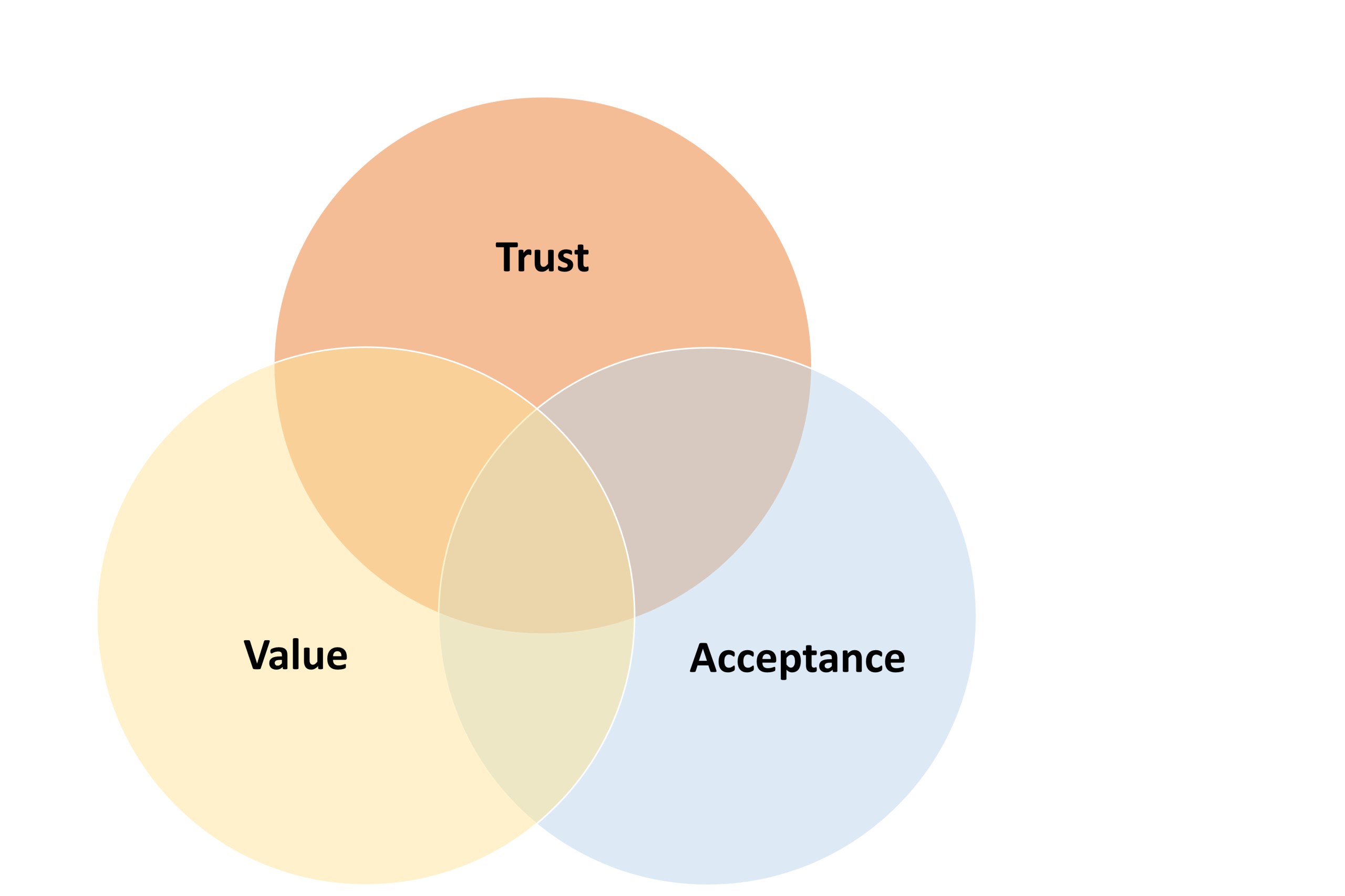
Each of the three has a page of its own, going into where it comes from, what the research says about it, and how to build it: Trust, Value, and Acceptance.
How They Show Up in Emotions
Difficult emotions point back to a shortage in one or more of the three.
Fear points to a lack of trust. Shame points to a lack of value. Anger points to a lack of acceptance.
Most emotions are combinations rather than single notes. Take overwhelm, which usually arrives as one large formless thing you cannot get hold of. Look closer and it tends to be all three at once: fear that you cannot handle what is in front of you, a sense that you are failing or not enough, and a fight with a situation you did not choose.
That is why overwhelm feels so total. It is not one problem. It is three.
And it is also why breaking it down helps so much. You do not have to solve overwhelm. You have to see which of the three is lowest and work there.
Build the Positive Rather Than Fight the Negative
This is the part that changes how the whole method works.
You do not eliminate fear by fighting fear. You eliminate it by building trust. Once you genuinely believe you can handle what is coming, the fear has nothing left to sit on. Same with shame and value. Same with anger and acceptance.
Attacking the negative emotion directly is like bailing water without finding the leak. Building the positive belief is finding the leak.
That reframe is worth the price of admission on its own, because it redirects effort from something that does not work to something that does.
They Work in the Positive Direction Too
The same three explain the good states. When you feel grounded and capable, it is because trust, value, and acceptance are all reasonably strong at once.
Noticing that matters more than it seems. Those moments are evidence, and evidence is exactly what you need to draw on later when a difficult belief is insisting things have always been bad and always will be.
Three Levers
The useful way to hold this is as three levers you can adjust to influence any emotional state.
The 4-Steps™ are the practical method for adjusting them. Mindfulness notices what is happening. Compassion makes it safe to look. Insight identifies which of the three is activated. Reframing shifts the belief underneath it.
Emotions are endlessly varied and the stories we tell ourselves are countless. Underneath all of them, the same three keep showing up. That is not a simplification. It is a map.
Micro Practice: Which One Is It?
Next time something knocks you sideways, take three breaths and ask three questions.
- What am I not trusting here?
- What about myself am I not valuing?
- What am I refusing to accept?
You are not fixing anything yet. Seeing which one is loudest is the whole exercise.
Related: what your emotions are telling you and Understanding Well-Being.