Understanding Well-Being
Every decision our brain makes is trying to protect or improve our well-being.
Our emotions tell us how well that effort is going.
Well-being is our overall assessment of how our life is going. It reflects whether our most important needs, goals, and values appear to be supported or threatened.
Well-being is not a fixed destination. It changes as our experiences change, and as our beliefs change.
The Four Types of Well-Being
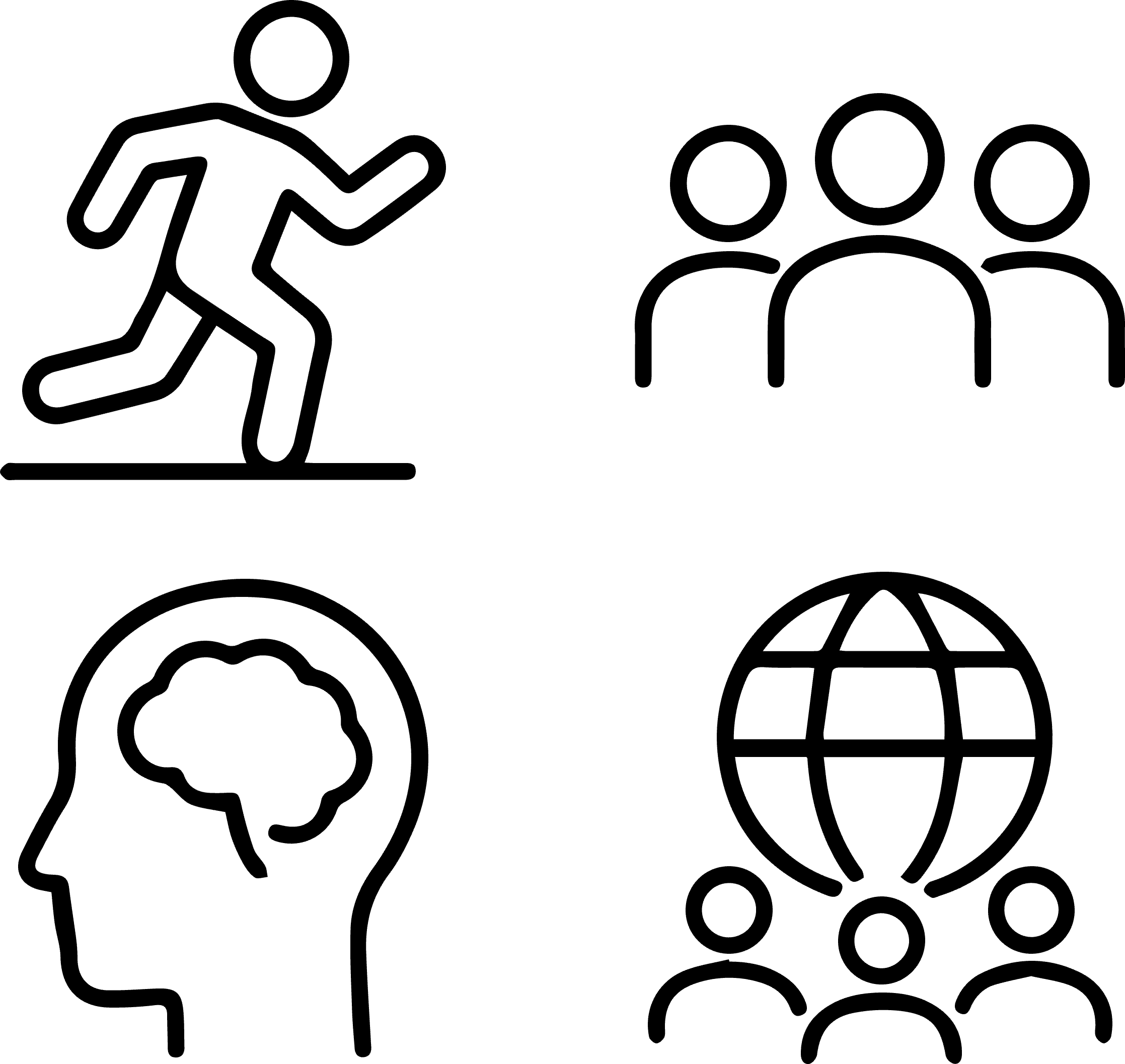
Every goal we have maps to one of four areas. Two we share with every animal. Two are uniquely human.
Each pair has one that is personal and one that belongs to the group. Physical and mental are about us as individuals. Social and cultural are about the group we belong to, and where we stand within it.
Bio-Logical
Physical
Our health and safety, and the basic needs of the body being met.
Bio-Logical
Social
Our place in a group, and the bonds, cooperation, and care that keep us and the group going.
Psycho-Logical
Mental
Our clarity of thought and emotional balance, and our ability to observe our own thinking rather than be carried by it.
Psycho-Logical
Cultural
The shared beliefs, values, and traditions that hold a group together, and where we stand within that meaning system.
At any moment one area may improve while another declines. Our emotional state reflects the overall balance.
The Minimum Optimal Level
Our brain is continually comparing our current well-being against what it believes is an acceptable minimum.
Below Minimum
Above Minimum
Below the Minimum
Negative emotions arise.
Comfortably Above It
Positive emotions arise.
This comparison happens automatically, all the time.
Four Types of Threats and Safety
Negative emotions are fundamentally threat assessments.
They signal that our brain believes one of the four types of well-being may be at risk.
Bio-Logical
Physical Threat
Illness, injury, exhaustion, or not having what the body needs.
Physical Safety
Health, rest, and having what the body needs to function well.
Bio-Logical
Social Threat
Losing standing in our group, being excluded, or losing the bonds and protection we depend on.
Social Safety
Being accepted in our group, holding our place in it, and knowing others will support us.
Psycho-Logical
Mental Threat
Confusion, self-doubt, or losing control of our own thinking and emotions. An animal cannot doubt itself; we can.
Mental Safety
Clear thinking, trust in our own judgment, and the sense that we can steer our thoughts and emotions rather than be carried by them.
Psycho-Logical
Cultural Threat
The shared beliefs, values, and traditions that hold our group together being challenged or eroded, or our standing within that meaning system being diminished.
Cultural Safety
The beliefs and traditions of our group holding, its shared meaning being upheld, and our standing within that meaning system being secure.
An emotion tells us what our brain currently believes, not necessarily what is objectively true.
Improving Well-Being
Eliminating uncomfortable emotions is not the goal. Understanding what they are telling us is.
When we strengthen healthier beliefs and make wiser choices about how we respond, our well-being naturally improves.
The emotions change because the assessment changes.
The 4-Steps™ help us recognize when our well-being feels threatened, and build the skills to respond more effectively.