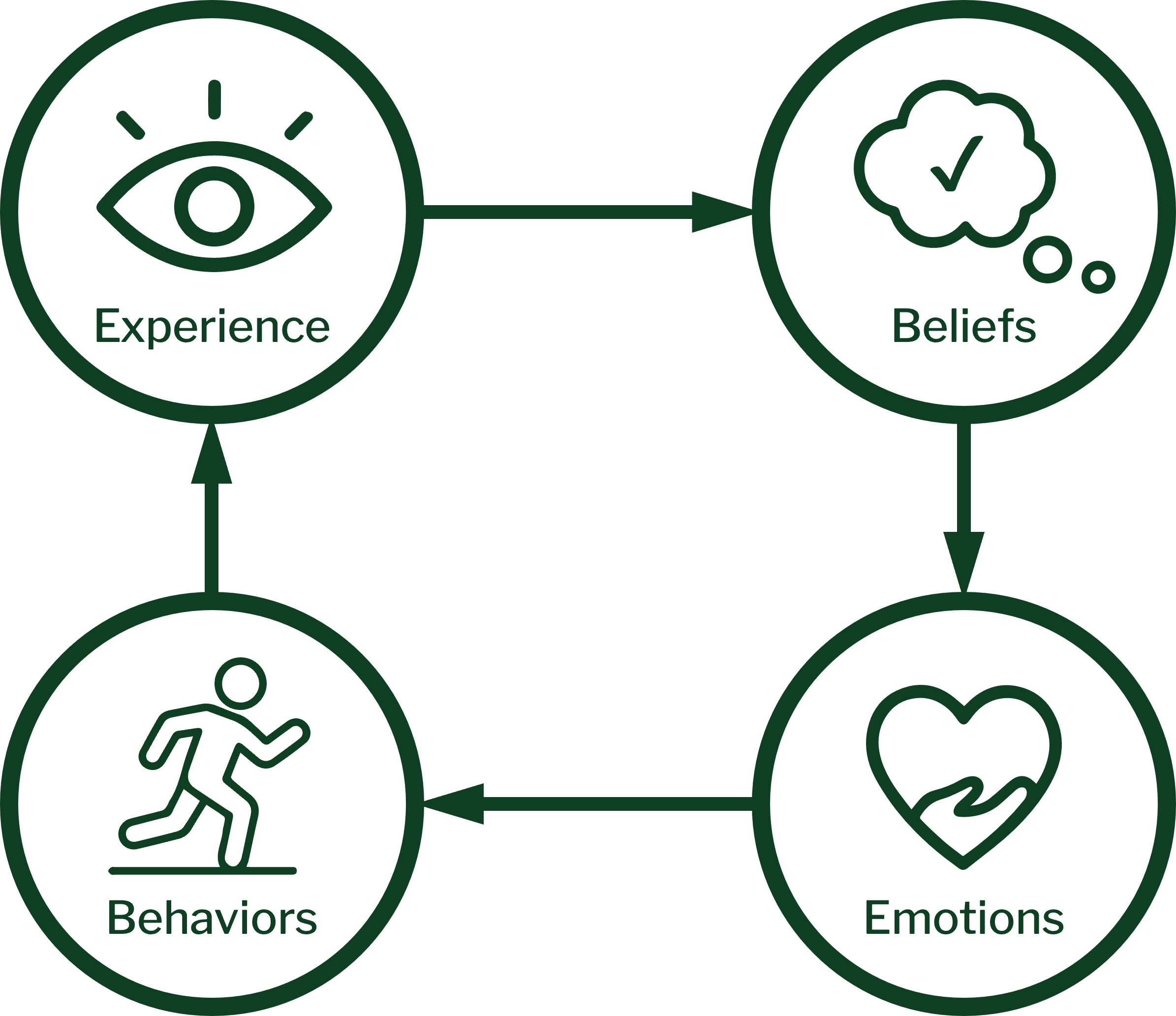
 ExperienceBeliefsEmotionsBehaviors
Stage Two
Understanding Beliefs
Once we become aware of something, our beliefs go to work.
Whether it arises around us or within us, we activate our beliefs about what we have noticed.
Beliefs are the concepts our brain has concluded are likely to be true about ourselves, other people, and the world.
They help us quickly interpret our experiences by assigning meaning, rather than having to work everything out from the beginning each time.
Awareness told us something was there. Meaning is what our beliefs add, and together they become recognition: knowing what something means to us.
Because our beliefs shape the meaning we give to every experience, they also shape how we feel and behave.
How Are Beliefs Formed?
Our brain continually gathers information from our experiences.
As we encounter similar experiences, our brain connects related information and gradually develops concepts. Each new experience adds to or refines those concepts, helping us better understand ourselves, other people, and the world around us.
Over time, repeated experiences strengthen our confidence in a concept. When our brain concludes that a concept is likely to be true, it becomes a belief.
From then on, that belief is used to help interpret future experiences.
Experiences
Concepts Develop
Repeated Experiences
Belief
How Are Beliefs Used?
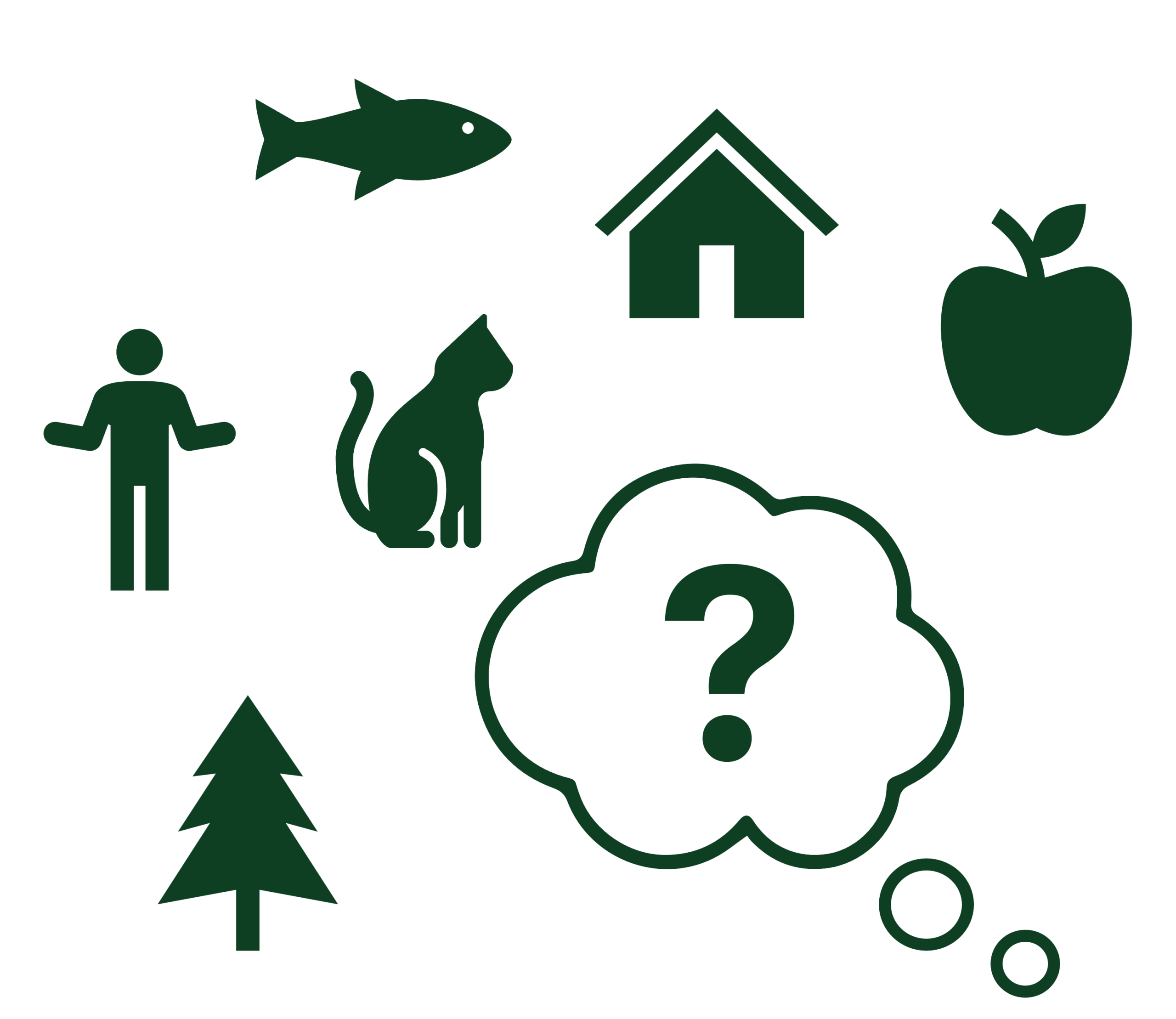
Beliefs are the reusable concepts our brain relies on to quickly recognize patterns and assign meaning.
Once our brain has concluded that a concept is likely to be true, it no longer needs to develop the concept each time a similar experience occurs. Instead, it compares new experiences with the beliefs it already holds, allowing it to quickly assign meaning.
This enables us to navigate an incredibly complex world without having to continually reinterpret every experience. However, it also means that beliefs formed from past experiences continue shaping how we interpret new ones until they are examined and changed.
The Three Core Belief Themes
Most of our beliefs relate to one of three fundamental themes: Trust, Value, and Acceptance.
Understanding these themes makes it easier to identify the beliefs influencing how we interpret our experiences.
Trust
Can I handle whatever happens? Trust beliefs are about our capacity to cope, whether we believe we have what it takes to face a situation, or whether we believe we will be overwhelmed by it.
When trust is low, fear and anxiety follow. Rebuilding trust in our own capacity is the antidote.
Value
Do I matter? Value beliefs are about our own worth, whether we believe we are fundamentally good, capable, and deserving, or whether we believe we fall short.
When value feels uncertain, shame and guilt follow. A steadier sense of our own worth is the antidote.
Acceptance
Can I stop fighting what I cannot control? Acceptance beliefs are about how willing we are to let reality be what it is, rather than insisting it be otherwise.
When acceptance is missing, anger and frustration follow. Acceptance, not resignation, is the antidote.
Changing Our Beliefs
Understanding our beliefs is only the beginning.
The 4-Steps™ provide a practical framework for identifying, examining, and reshaping the beliefs that influence our emotions and behaviors.