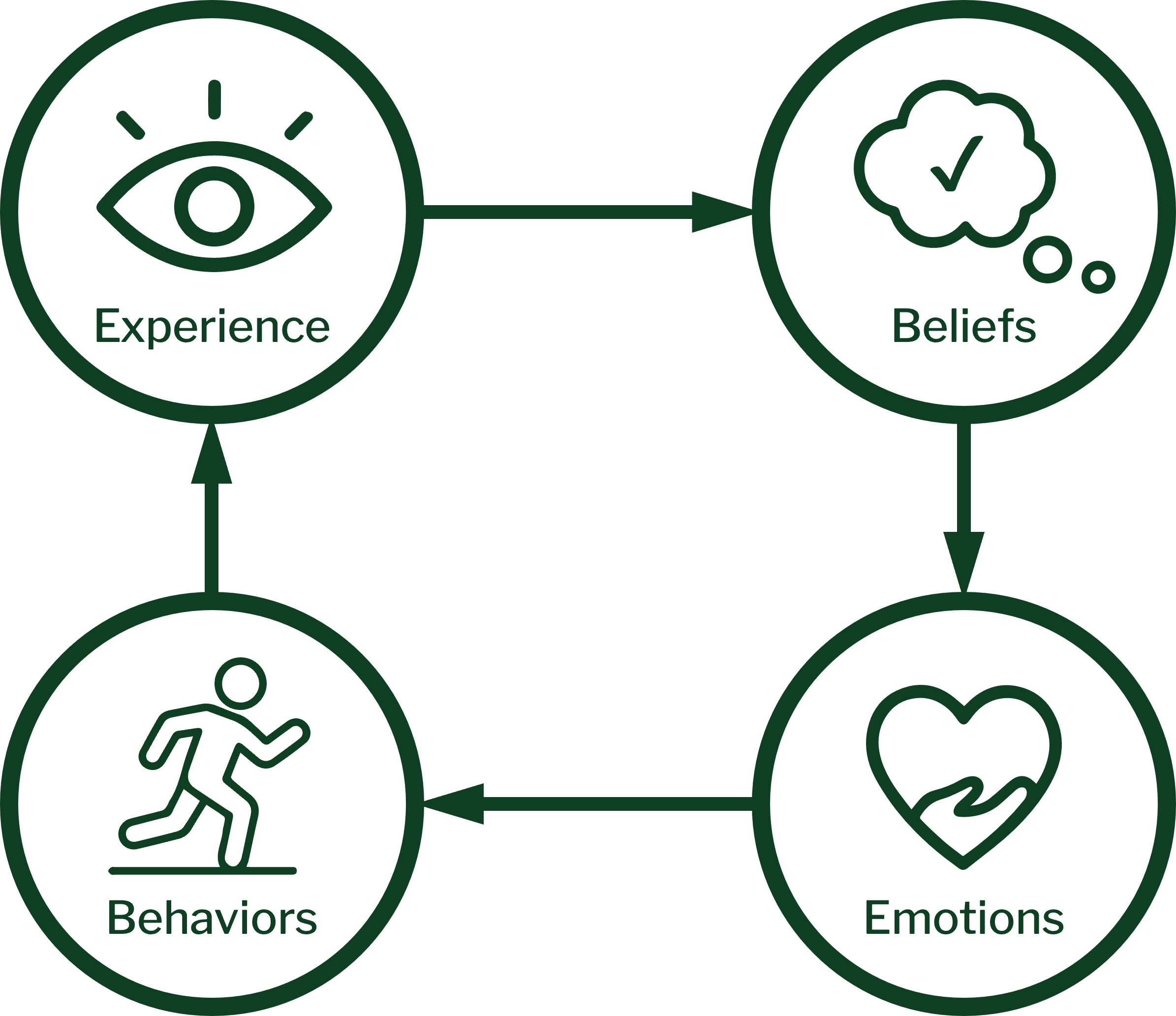
 ExperienceBeliefsEmotionsBehaviors
Stage Four
Understanding Behaviors
Behaviors are our response to what our brain believes and feels is happening.
Every one of them is an attempt to protect our well-being.
Every behavior creates a new experience, beginning the cycle again.
The Three Levels of Behavior
A behavior is anything we do, or choose not to do, in response to an experience.
It arrives from one of three levels, each handled by a different part of the brain.
Low Level
Inherent Functions
Reflexes
Involuntary and automatic, with no conscious control at all. Heart rate, digestion, basic muscle movement.
The brain’s lower structures, the amygdala region.
Medium Level
Learned Functions
Reactions
Automatic responses that run without moment-to-moment thought. Walking, driving, playing an instrument.
The neocortex.
High Level
Executive Functions
Actions
Voluntary, deliberate, consciously thought out. Planning a trip, learning something new, imagining a future we want.
The prefrontal cortex.
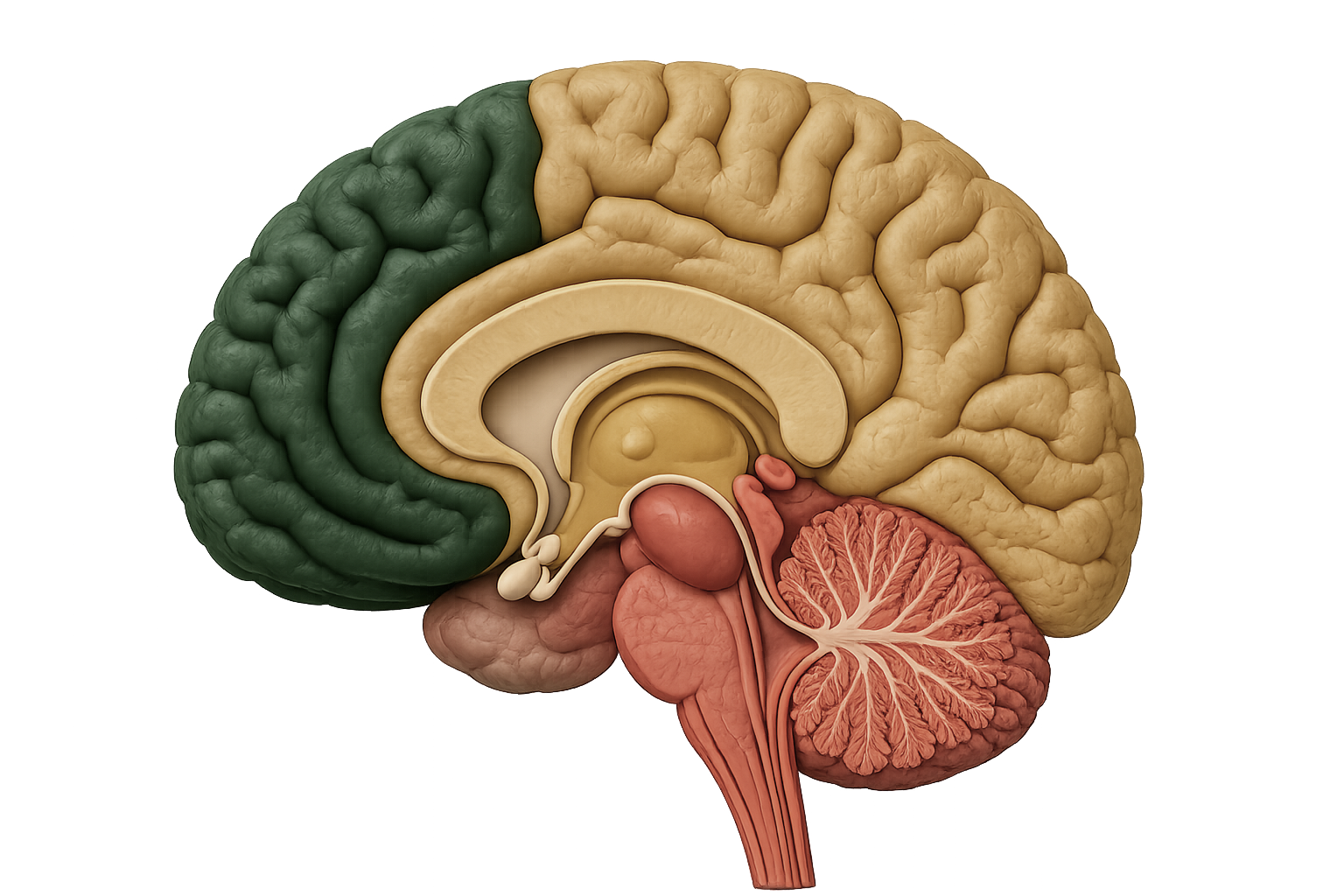 ActionsReactionsReflexes
This is why some responses feel instant and unstoppable while others feel like choices we made.
Every one of them is an attempt to protect or improve our well-being.
Why We Behave the Way We Do
Behavior does not appear from nowhere. It sits at the end of a chain.
One
Experience
What we become aware of
Two
Beliefs
What we decide it means
Three
Emotions
How it affects our well-being
Four
Behaviors
What we do about it
Behavior is the visible end of an invisible process.
Every Behavior Protects Our Well-Being
Even behavior that seems irrational usually makes sense once we see the belief and emotion that produced it.
Avoidance
Protects.
Anger
Defends.
Withdrawal
Conserves.
Seeking Support
Connects.
A behavior may or may not be helpful. It always has a purpose. That purpose is always to maintain or improve your well-being.
Helpful and Unhelpful Behaviors
Some behavior moves us toward well-being. Some buys short-term relief and creates long-term problems.
Moves us forward
Helpful
- Difficult Conversations
- Asking for Help
- Resting When Needed
- Setting Boundaries
- Facing What We Fear
- Etc.
Short-term relief
Unhelpful
- Avoidance
- Blaming Others
- Aggression
- Rumination
- Isolation
- Etc.
Changing Behavior
Forcing behavior to change without understanding the belief behind it is hard work, and it rarely lasts.
The old belief keeps generating the old emotion, and the old emotion keeps pulling us back. Lasting change comes from further upstream.
Change the belief. The behavior follows.