
Sometimes the alarm will not turn off because the thing setting off the alarm is the alarm itself.
The tightness in your chest before a meeting you have been dreading. The worry that follows you home and sits beside you while you try to eat dinner. Waking at three in the morning with your mind already racing through tomorrow.
If that is familiar, this is how it happens, and why it can feel so hard to stop.
The Same Situation, Two Outcomes
Two people can face identical pressure and respond completely differently. One shuts down. The other performs at their best.
The difference is not the situation. It is what each believes about the situation relative to their own skills.
Psychologist Richard Lazarus showed that distress occurs when we perceive that the demands of a situation exceed our ability to cope. Mihaly Csikszentmihalyi described the same thing from the other side with flow: when perceived challenge and perceived skill are in balance, we get absorbed, focused, and time seems to move differently.
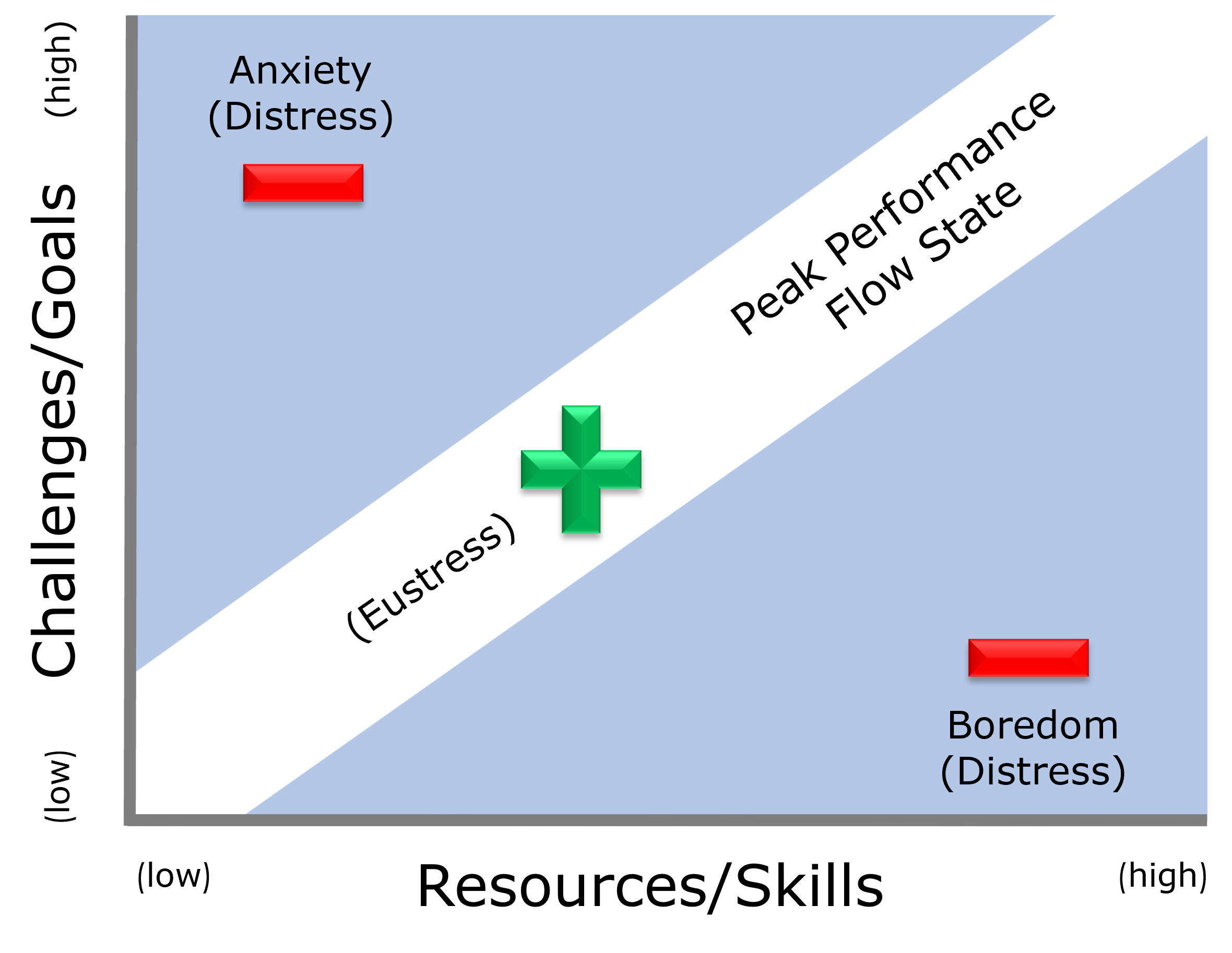
High challenge and low perceived skill produces anxiety. High skill and low challenge produces boredom. Both are forms of distress, and in both cases it is the perception doing the work, not the circumstances.
Which has a practical consequence. If beliefs determine whether a situation feels manageable, then shifting those beliefs, even modestly, changes the experience. Breaking a challenge into smaller pieces. Reminding yourself of skills you already have. Acknowledging that you can learn what you do not yet know, or ask for help. None of that changes the situation. It changes the assessment.
The Normal Response
Before the loop, it is worth seeing the system working properly.
Something happens, externally or in your own thinking. Your brain forms a belief: this is a threat. That belief produces sensations, a faster heart, a tight chest, a churning stomach. Your brain reads those sensations and gives them meaning, recognizing them as fear. Because the intensity is high, dealing with the threat becomes top priority, and behaviour follows.
Then the threat resolves, the intensity drops, and the system settles.
That is normal stress. Nothing has gone wrong.
Where It Turns
Here is the pivot.
When your body produces intense sensations, your brain receives them like any other sensory input and assigns meaning based on past experience.
If your beliefs say a racing heart is just what a body does under threat, the brain marks it as not dangerous and things settle.
But if your beliefs say those sensations are themselves dangerous, that a racing heart means a heart attack is coming, that dizziness means you are losing control, that tightness means something terrible is happening, then the brain registers the fear response itself as a new threat.
The whole cycle runs again, with the fear as the input. A new belief forms: my fear is dangerous, something is seriously wrong. That produces a new emotion, fear of the fear, which is more intense than the first. The body responds more strongly. The intensity climbs.
Now avoidance begins. You withdraw from places where it has happened before. You avoid situations, people, activities. And you start monitoring your body for any early sign it is returning.
That monitoring is the trap. Watching for the threat keeps the threat assessment active, which keeps the body elevated, which produces more sensations to notice.
The loop no longer needs anything from the outside world. It runs on itself.
Why Reassurance Does Not Fix It
This explains something that frustrates a lot of people. Being told there is nothing to worry about does not help, and neither does telling yourself.
The belief driving the loop is not about the original situation. It is about the sensations. And a belief about sensations is not reachable by an argument about circumstances.
It also explains why avoidance feels like it works and makes things worse. Each time you avoid, the immediate fear drops, which teaches the system that avoidance was necessary. The world gets a little smaller. And the belief that these sensations are dangerous goes untested for another day.
What Actually Breaks It
The loop needs two things: the belief that the sensations are dangerous, and the resistance that keeps feeding them.
Take either away and it runs out of fuel.
Which is why the response that works is the opposite of the instinctive one. Rather than fighting the sensations, you let them be there and find out what happens. Usually the intensity rises, plateaus, and fades, because nothing is feeding it. Do that a few times and the belief starts to lose its certainty, not because you argued it away, but because you have evidence.
That stance is called open and allowing, and it is one of the most useful things in this method.
Underneath it all, what is actually missing is trust. Not confidence that nothing bad will happen, which nobody can promise, but trust that you can handle what you feel. Fear shrinks as trust grows.
Micro Practice: Name the Layer
When anxiety is running, take three breaths and work out which layer you are on.
- Is this about the situation itself?
- Or is it about what my body is doing?
- Or is it about the thought I just had about what my body is doing?
Most of the intensity usually lives in the second and third. Seeing that is often enough to take some of the weight out of it.
Where This Leads
Understanding the loop is not the same as being free of it, but it changes what you are dealing with. Not a defect. A process, running as designed, on beliefs that can be examined.
Start with Nothing Is Broken if you have not read it, and feelings and emotions for why a sensation is not the same as what you make of it.
If anxiety is intense, persistent, or debilitating, please speak to a qualified therapist, counsellor, or doctor. This approach complements professional support rather than replacing it.