Level Two
Reactions
Reactions are the behaviors we learned so thoroughly that they no longer need us.
Driving a familiar route. Typing. Walking over uneven ground. A sharp reply to a tone of voice we have heard before.
Every one of these was once difficult. Now they run without us, which is exactly what makes them so useful and so easy to miss.
 ActionsReactionsReflexes
What Makes a Behavior a Reaction
A reaction sits between a reflex and a decision. It has one foot in each.
Voluntary
Unlike a reflex, this behavior is ours. We could interrupt it. Most of the time we simply do not notice there was anything to interrupt.
Automatic
It runs without moment-to-moment thought. That is the whole point of learning something: to stop having to think about it.
Learned
Nobody is born knowing how to drive. Anything learned can be examined, and anything learned can be learned differently.
Psychologists call this level subconscious. Not hidden the way a reflex is hidden, but running below the surface of our attention. We are aware of what is happening. We are simply not consciously involved in deciding what to do about it.
These are the things we do on autopilot.
Where Reactions Are Managed
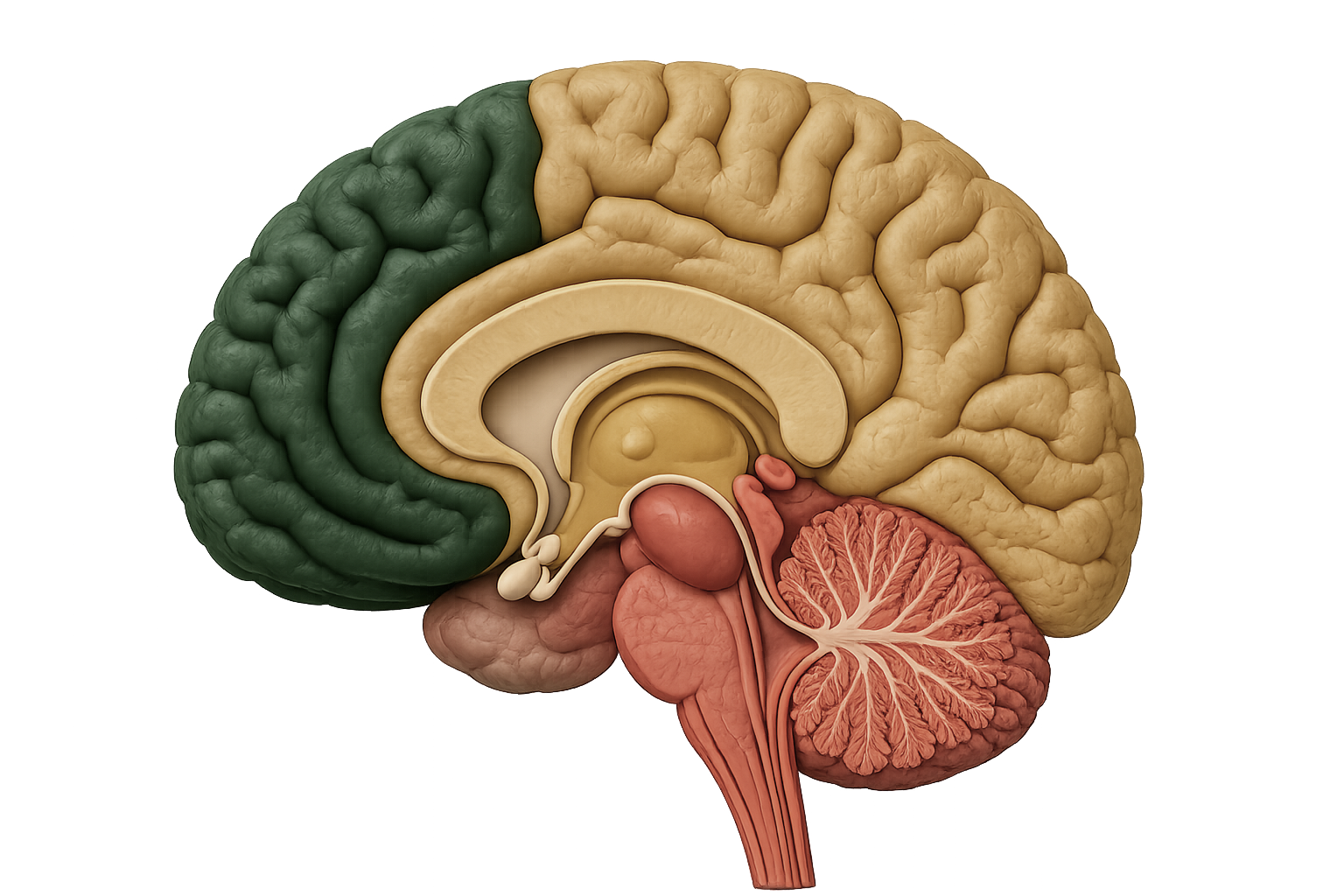
Reactions are coordinated by the neocortex, the large outer layer of the brain that handles what we have learned.
Sensory input arrives at the amygdala region first for a fast initial read, then passes up. The neocortex compares what is arriving now against patterns from our past, and when it finds a match it calculates the best response and sends the instruction back down to be carried out by the body.
The lower level is doing the detailed work of moving muscles and delivering oxygen. Think of it as a subcontractor. The decision belongs to this level.
One
Input Arrives
Something happens around us or within us
Two
Pattern Matched
Compared against what we have met before
Three
Response Selected
The best fit is chosen, without us weighing in
Four
We React
And often notice only afterwards
The speed comes from the pattern matching. Our beliefs about what things mean are what make the match fast, which is why the same event can produce very different reactions in two people.
Two Kinds of Autopilot
The same machinery gives us our best skills and our most frustrating habits.
Serving us well
Practised Skill
- ✓Driving a familiar route
- ✓Reading these words
- ✓Catching a glass before it falls
Costing us something
Practised Habit
- ✗Snapping at a certain tone of voice
- ✗Going quiet when we feel judged
- ✗Reaching for the phone when uncomfortable
There is no separate part of the brain producing the unhelpful ones. Both columns were built the same way, by repetition, and both can be rebuilt the same way.
A habit is not a character flaw. It is a well-practised reaction.
See Your Autopilot in Action
The handover from effort to automatic is easiest to notice in something you have already mastered.
Try this
One. Think of something you do regularly that once took your full concentration. Driving, typing, cooking a familiar meal, the route to work.
Two. Remember learning it. How much attention did each step demand back then?
Three. Now notice how much of it happens today without you thinking about it at all.
That shift is the neocortex taking over management of something that once needed your conscious involvement.
The same handover happened with our emotional reactions. We just were not watching when it did.
Why Reactions Matter to Us
This is the level where most of our difficulty lives, and it is the first level we can actually reach.
Reflexes are closed to us. Reactions are not. They are learned, which means they can be examined, and they are voluntary, which means they can be interrupted. The only thing standing in the way is that we are usually not present when they fire.
That is what mindfulness is for. Not to stop the reaction, but to be there while it happens, which turns an automatic response back into a choice.
We cannot change what we never noticed. Noticing is the whole of the first step.