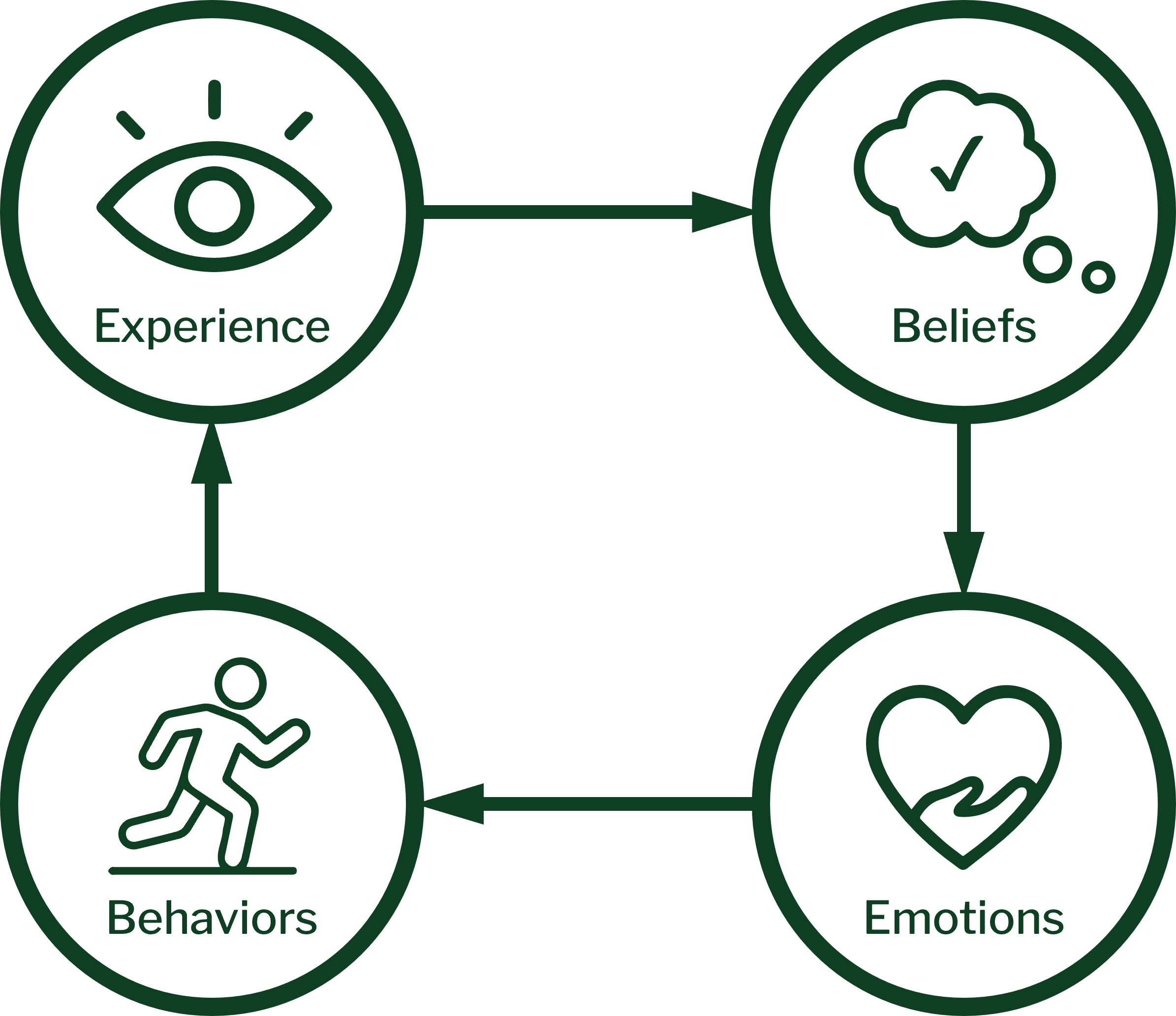
How We Process Our Experiences
Every moment, we have experiences arising from the world around us and from within our own bodies.
Our brain, body, and mind continuously process these experiences, shaping how we think, feel, and behave.
As we process our experiences, we recognize patterns, create meaning, and form beliefs about what is happening. Those beliefs shape our emotions and behaviors.
The diagram represents the general processing cycle our brain, body, and mind continuously perform.
The Parts of the Cycle
Each part of the cycle plays a different role.
Together they shape how we experience, interpret, feel, and respond to the world.
Experiences
Anything we experience from the world around us or from within our own bodies.
They are simply information until our brain recognizes them and gives them meaning.
Beliefs
The assumptions our brain treats as true about ourselves, others, and the world.
They determine the meaning we assign to every experience.
Emotions
Our emotions are not random. They are information.
They reflect what our beliefs tell us about our experiences.
Behaviors
Everything we do, or avoid doing, is our brain’s attempt to protect our well-being based on what it believes and feels.
Our behaviors are shaped by what our brain believes and how we feel.
Experiences
Anything we experience from the world around us or from within our own bodies.
They are simply information until our brain recognizes them and gives them meaning.
Beliefs
The assumptions our brain treats as true about ourselves, others, and the world.
They determine the meaning we assign to every experience.
Emotions
Our emotions are not random. They are information.
They reflect how our brain evaluates an experience through the beliefs it holds.
Behaviors
Everything we do, or avoid doing, is a response.
Our behaviors are shaped by what our brain believes and how we feel.
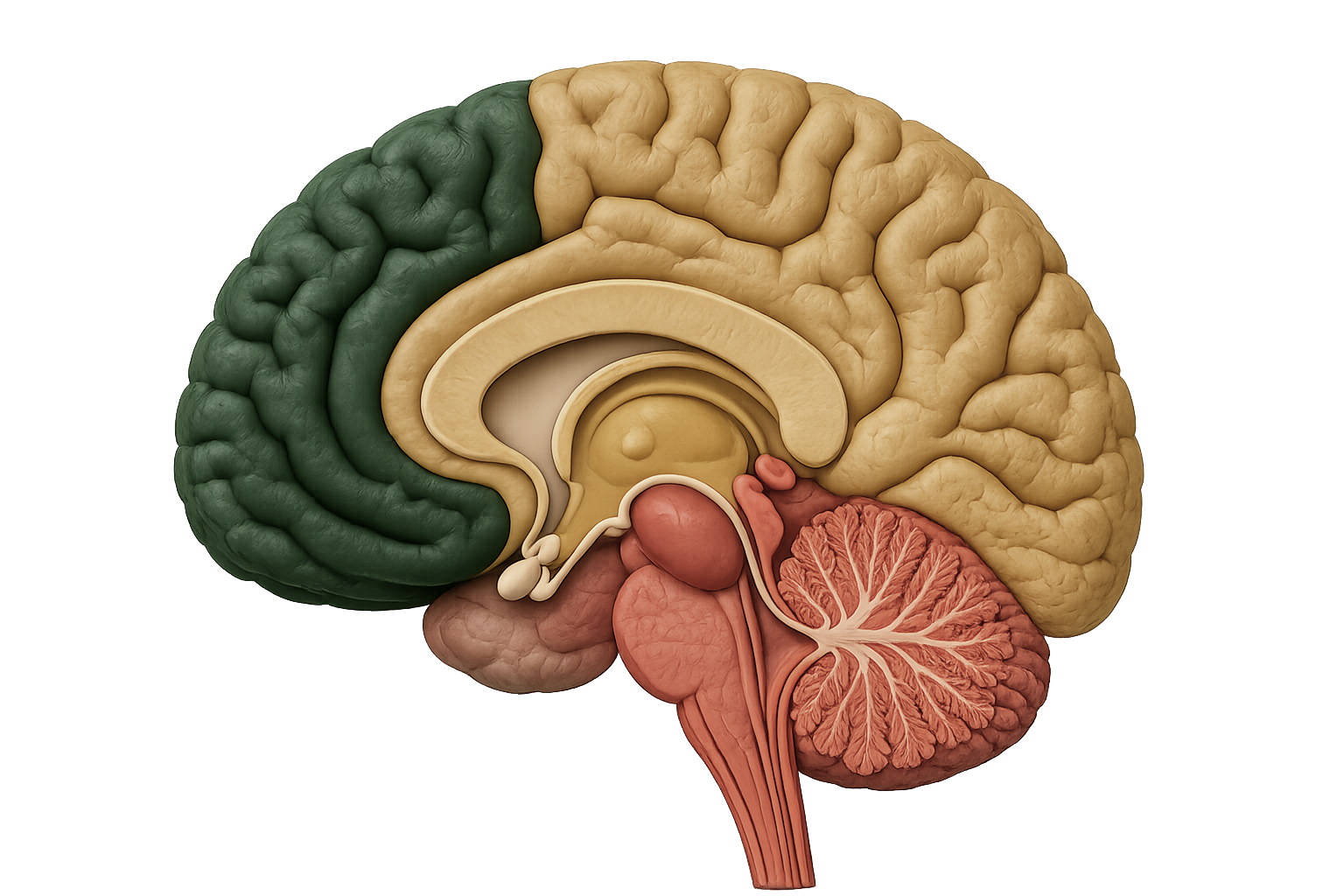
This Processing Happens at Three Levels
The general processing cycle is happening continuously, whether we are aware of it or not.
It operates concurrently at three functional levels within the brain, body, and mind. Information is passed between these levels as they work together to interpret what is happening and determine how we respond.
The first two levels carry out bio-logical processing. The third level adds the uniquely human psycho-logical ability to consciously observe and influence our thinking.
Understanding these levels explains why some processing happens automatically while other parts can be consciously changed.
Understanding your processing is only the beginning.
The 4-Steps™ give us an ordered way to recognize this process and influence it.
Each step makes the next one possible.