Practice is where understanding becomes a skill.
The 4-Steps™ are developed through practice, not simply by reading about them.
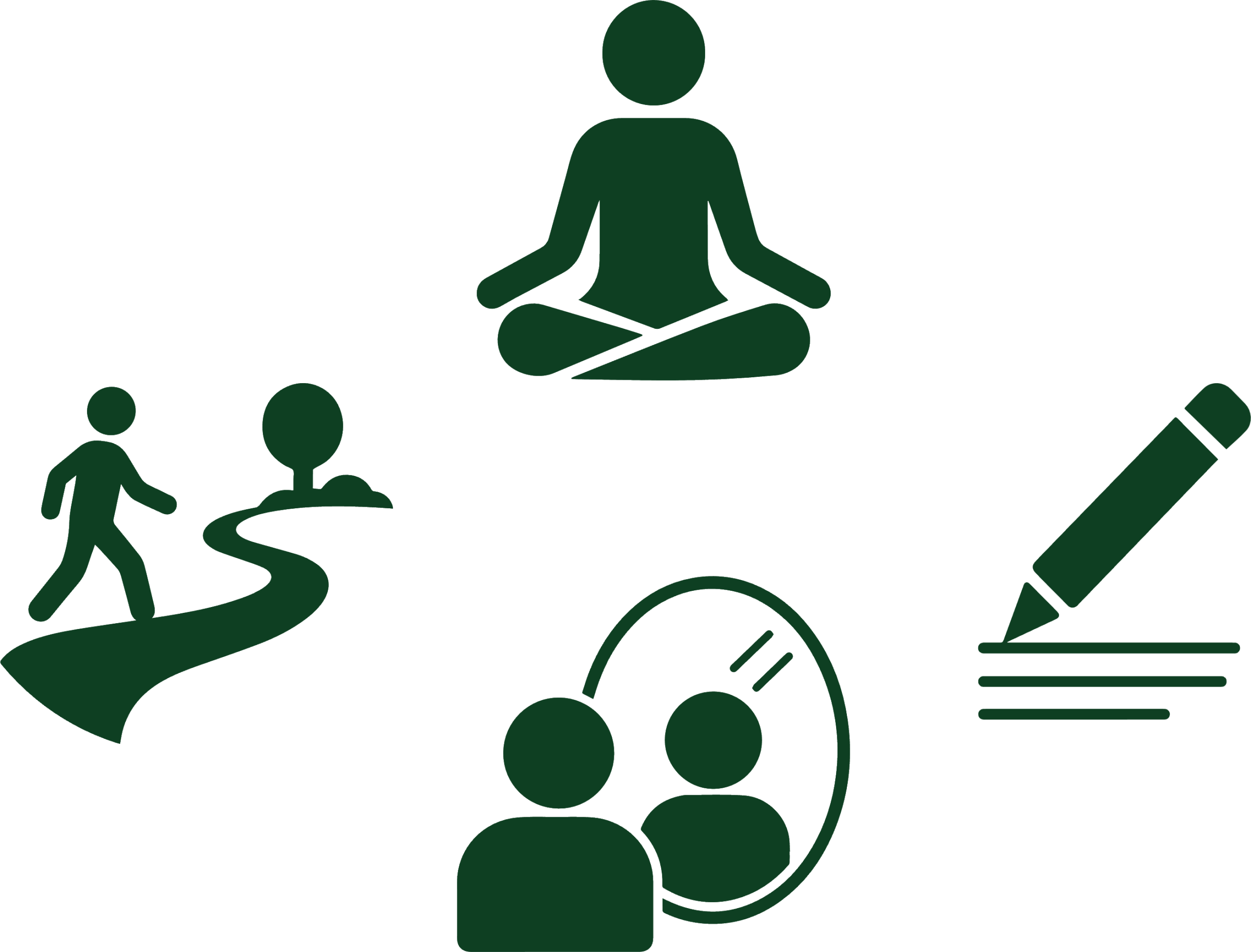
Meditation, writing, mirror work, and everyday life all provide different ways to strengthen the same four skills.
As those skills grow, they become a more natural way of thinking, feeling, and responding to life’s experiences.
How the Practices Work
Although each practice looks different, they all follow the same process.
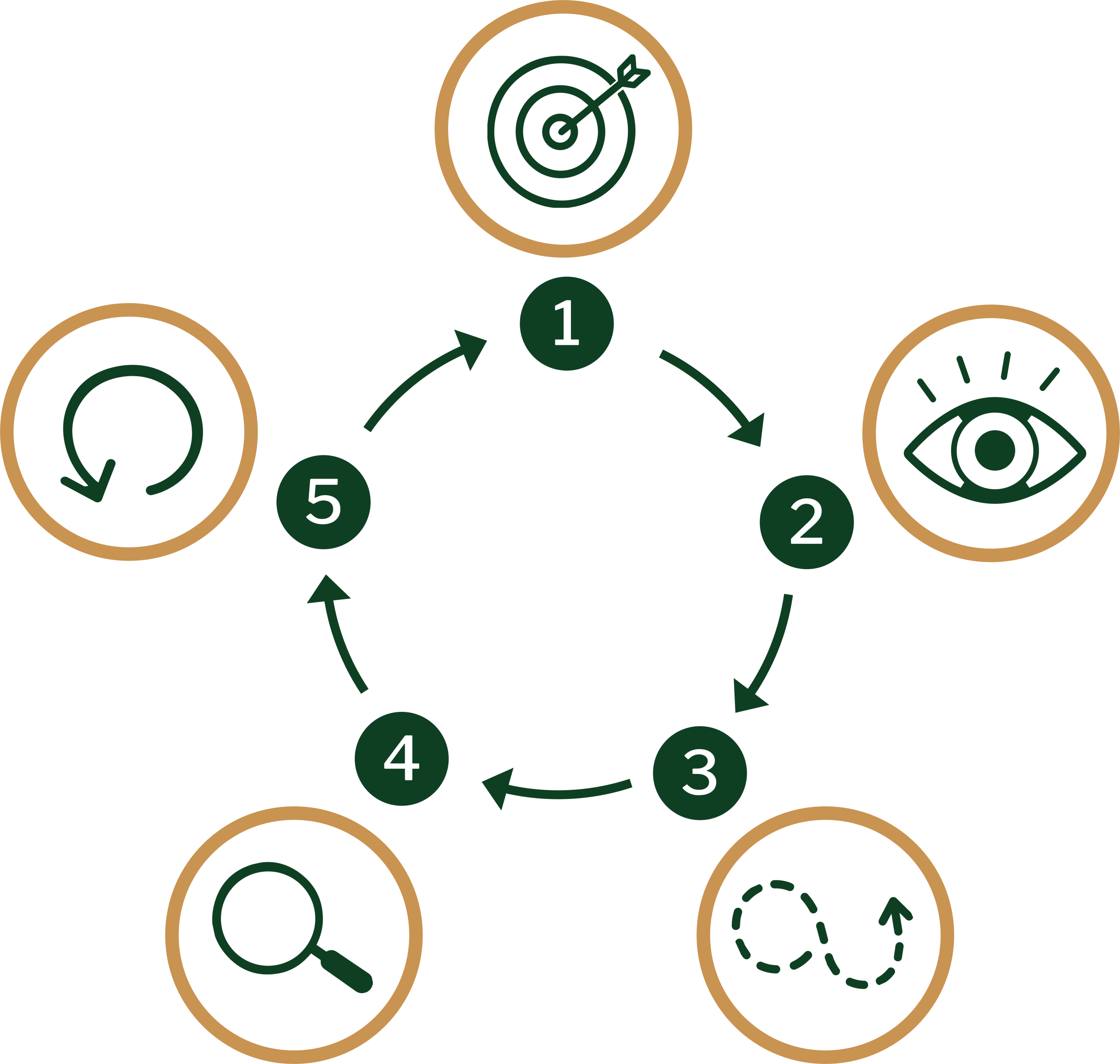
Every practice begins by setting an intention.
Your intention determines what you are practising. Your attention determines whether you are practising it.
The Practice
- 1
Set your intention.
- 2
Direct your attention towards your intention.
- 3
Your attention wanders.
- 4
Notice your attention wandering.
- 5
Return your attention to your intention.
If your attention wanders, don’t worry. That is expected. The practice is not stopping your attention from wandering. The practice is noticing that it has wandered and gently returning it to your intention.
You Are the Master of What You Practise
Your intention will be to choose one of the 4-Steps™ skills to work on:
- ✓Mindfulness
- ✓Compassion
- ✓Insight
- ✓Reframing
And your attention will be focused on:
- ✓Awareness
- ✓Feelings (body sensations)
- ✓Emotions
- ✓Thoughts
- ✓Anything else
It’s up to you to choose your intention and your attention depending on what you feel needs work.
Meditation
Meditation is a mental training exercise.
It provides a quiet, structured environment where you can deliberately practise the 4-Steps™ with fewer distractions than everyday life.
Before you begin, simply set your intention. Meditation can be used to develop Mindfulness, Compassion, Insight, Reframing, or any combination of the four skills.
Why It Works
- ✓Provides a quiet environment with fewer distractions
- ✓Makes it easier to notice where your attention is
- ✓Creates opportunities to deliberately practise the four skills
- ✓Builds confidence before applying the skills in everyday life
Ways to Practise
- •Begin with a clear intention.
- •Choose a guided meditation or practise on your own.
- •Start with a few minutes and gradually increase your practice.
- •Explore different meditations that develop different combinations of the four skills.
- •Practise regularly rather than occasionally.
What Meditation Is Not
It is not emptying your mind, stopping your thoughts, or sitting in a special position. It has nothing to do with incense, chanting, or any religious or spiritual practice.
It also will not leave you relaxed and peaceful every time, and that is not a sign you are doing it wrong.
Meditation is simply a quiet place to practise noticing, and noticing is a skill.
With Practice You Develop
- ✓Greater awareness of where your attention is
- ✓The ability to intentionally direct your attention
- ✓Stronger Mindfulness, Compassion, Insight, and Reframing
- ✓Skills that naturally transfer into everyday life
Want a full set of meditations to guide you? They’re documented in Center Yourself and Soar. →
Writing & Journaling
Writing transforms thoughts and emotions into something you can observe.
Instead of thoughts rapidly moving through your mind, writing makes them visible, making it easier to recognise patterns, understand beliefs, and explore new perspectives.
Before writing, decide which skill or combination of skills you want to practise.

Why It Works
- ✓Makes thoughts and emotions easier to observe
- ✓Reveals recurring beliefs and patterns
- ✓Encourages deeper reflection
- ✓Supports Insight and Reframing
Ways to Practise
- •Reflect on a recent experience.
- •Explore a recurring thought or belief.
- •Write to your younger self.
- •Write to your future self.
- •Write to another person.
- •Turn any meditation into a journaling exercise by writing your responses instead of thinking them.
There Is No Right Way to Journal
You don’t need a special journal, a particular writing style, or a list of prescribed exercises.
The goal isn’t to produce perfect writing. The goal is to better understand your thoughts, emotions, beliefs, and experiences.
Whether you write for a few minutes or several pages, the value comes from honestly exploring whatever is present for you.
With Practice You Develop
- ✓Greater self-awareness
- ✓Clearer understanding of your beliefs
- ✓Stronger Insight
- ✓More effective reframing skills
Want a full set of writing and journaling exercises? They’re documented in Center Yourself and Soar. →
Mirror Exercises
Mirror exercises help you see yourself more clearly by combining self-awareness with self-compassion.
Looking at yourself while speaking your thoughts aloud often brings emotions, beliefs, and reactions into awareness that are easy to overlook when they remain inside your mind.
Before beginning, decide which skill or combination of skills you want to practise.

Why It Works
- ✓Makes thoughts and emotions more tangible
- ✓Encourages honesty and self-awareness
- ✓Strengthens self-compassion
- ✓Helps uncover unhelpful beliefs
Ways to Practise
- •Speak a meditation aloud instead of thinking it.
- •Talk to your present self.
- •Speak to your younger self.
- •Speak to your future self.
- •Practise offering yourself the same compassion you would offer someone you care about.
- •Explore a difficult belief or emotion by expressing it aloud.
It’s Normal to Feel Uncomfortable
Many people feel awkward the first time they try a mirror exercise.
This discomfort is completely normal. Rather than avoiding it, use it as an opportunity to practise Mindfulness, Compassion, Insight, and Reframing. Over time, speaking to yourself with honesty and kindness often becomes more natural.
With Practice You Develop
- ✓Greater self-acceptance
- ✓Stronger self-compassion
- ✓Increased emotional awareness
- ✓Deeper Insight
- ✓More balanced Reframing
Want a full set of mirror exercises to work through? They’re documented in Center Yourself and Soar. →
Real-World Practice
Real-world practice is where the four skills become part of everyday life.
The same skills you develop during meditation, writing, and mirror exercises can be practised anywhere. As your confidence grows, you gradually increase the complexity of your practice, applying the same skills in increasingly challenging situations.
Before responding to a situation, decide which skill or combination of skills you want to practise.

Everyday Opportunities
- ✓During difficult conversations
- ✓When strong emotions arise
- ✓While working or travelling
- ✓During moments of success or disappointment
- ✓Whenever life doesn’t go as planned
Ways to Practise
- •Set an intention.
- •Notice where your attention is.
- •When your attention wanders, gently return it to your intention.
- •Observe your thoughts, emotions, and body sensations.
- •Choose your response instead of reacting automatically.
- •Practise Mindfulness, Compassion, Insight, and Reframing in the moment.
Real Change Happens in Real Life
Practising in a quiet environment helps build the skills.
Practising in everyday life helps integrate them.
Over time, the four skills become a more natural way of thinking, feeling, and responding, even when life is busy, uncertain, or challenging.
With Practice You Develop
- ✓Greater awareness in everyday situations
- ✓More intentional responses
- ✓Increased emotional resilience
- ✓Greater confidence using the four skills when they matter most
Want a full set of real-world practices to try? They’re documented in Center Yourself and Soar. →
Practice Creates Lasting Change
Every practice strengthens the same four skills from a different perspective.
The more consistently you practise, the more naturally Mindfulness, Compassion, Insight, and Reframing become part of everyday life. Over time, they become less like techniques you remember to use and more like habits that shape how you think, feel, and respond.
The practices are not the goal. They are the training that develops the skills.
Start with a meditation and begin developing the four skills today.