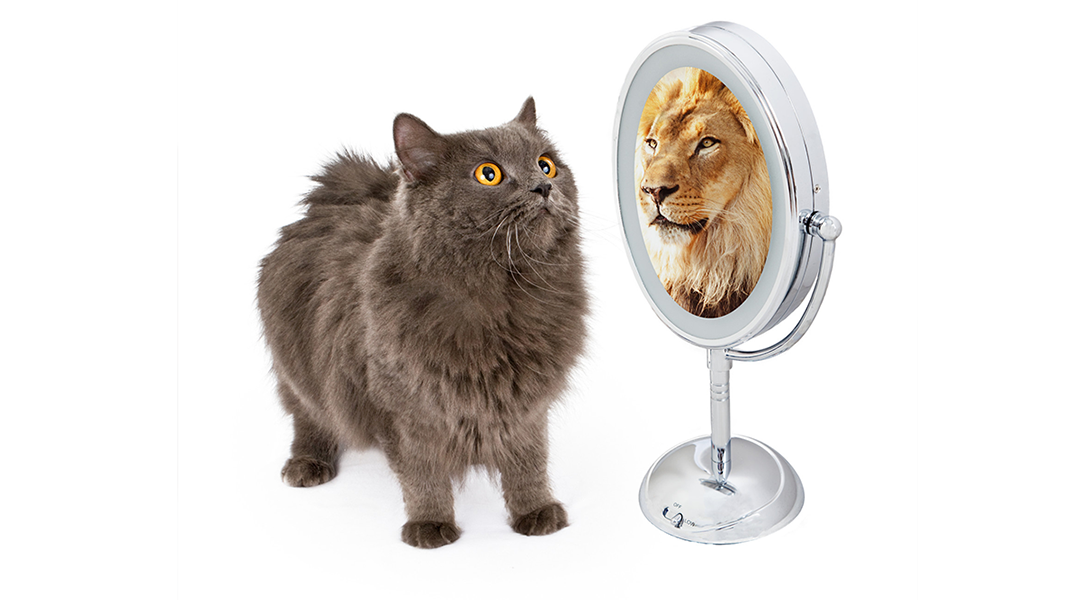
You are not just a person who thinks and feels and reacts. You are also capable of watching yourself do all of that. That capacity is the foundation everything else rests on.
The Part of You That Can Watch
Consciousness is the ability to think about our own thinking. We can have thoughts about our thoughts. We can have emotions about our emotions. We can notice that we are noticing.
That part of you, the one that can step back and observe your own thinking and feeling and reacting, is what we call the observer.
Micro Practice: Notice Your Awareness
- Notice that you are reading these words.
- Now notice that there is a part of you aware that you are reading.
- Observe that this awareness has been there the whole time. You are using it right now.
The observer did not switch on when you read that. It has been running quietly your entire life. What changes is that you now know it is there, and you can choose to use it deliberately.
Why It Matters
Our brains are constantly making assessments about what is happening around us and within us. We interpret experiences and read them for danger, ease, opportunity, threat. We also interpret them in relation to ourselves, what they say about us and whether they define us.
Those interpretations are beliefs, and beliefs are what generate our emotions. Emotions play out in the body as sensations, and they rerank what matters to us in the moment, which drives what we do next.
So if we want more balance, we have to see the beliefs clearly. We may be exaggerating what is happening, in which case the emotions and body sensations that follow are exaggerated too. The observer is what lets us look.
Self-awareness is knowing where we are right now. What is happening, and what we are telling ourselves about what is happening. Only once we know where we actually are can we move somewhere else.
The Myth of the Quiet Mind
People often think self-awareness requires a calm, still mind, and give up when they discover theirs is not.
Have you ever tried to make your mind go quiet? Tried to stop worrying, stop replaying something? The harder you push, the louder it gets.
There is a reason. Your brain never stops processing. Research found that effortful mental tasks increase total brain energy use only slightly. What changes is not how much the brain is working but which networks are active and what they are handling.
So when someone says “I cannot do this, my mind is too busy,” the answer is that a busy mind is not an obstacle to observing. It is the thing being observed. The moment you notice your mind is busy, you are already doing it. The chaos is not the problem. It is the material.
When the Reaction Is Faster Than You
There is one situation where this capacity gets seriously tested, and it is worth naming. Sometimes an emotional reaction fires so fast there is no gap at all. The belief is already running before you have had a chance to think.
What we usually call a trigger is really just the context. The reaction was already loaded.
This is the useful part: external events and other people’s words are the context, not the cause. They activate a response, they do not create it. Two people can hear identical criticism and react completely differently, not because the words differed but because their beliefs did.
Which means when we react intensely to something, the reaction is telling us as much about our own beliefs as about the event. And beliefs, unlike the events that set them off, can be changed.
You Are Not Fixed
This conscious awareness is also where our sense of self comes from. What people call the ego is simply the collection of beliefs we hold about ourselves: our capabilities, our identity, how we fit into the world. It is not an entity to be conquered. It is not an enemy. It is a set of beliefs, and like any beliefs it can be updated.
Personality is the collection of behaviors that follow from that self-definition. Because the beliefs can change, neither the ego nor the personality is fixed.
That matters if you have ever felt boxed in by your own identity. No self-definition is set in stone, whether it concerns your abilities, your traits, your past, or a diagnosis you have been given.
Where Choice Comes In
Much of our decision-making happens without conscious involvement, which raises a fair question about where choice actually lives.
Consciousness gives us a meaningful kind of it. We can pause. We can reflect on our options. We can re-examine our goals and values and ask whether the one our brain has ranked highest is really the one that serves us.
This is not unlimited freedom. Once a goal is ranked and a behavior is underway, the lower levels of the brain carry it out without asking permission. What we influence most directly is the ranking. We choose which goals matter most, and the behaviors follow.
The system is not a prison. It is a machine we can learn to operate.
Where This Leads
Observing is a skill, and like any skill it improves. The 4-Steps™ approach is designed to develop it: Mindfulness to see what is there, Compassion so that seeing it does not become an attack, Insight to understand the beliefs underneath, and Reframing to shift them.