Your brain is behind every thought, every emotion, every reaction you have. It is not complicated once you see it. And once you do, what has felt random or out of control starts to make far more sense.
Your Brain Is Always Making Sense of Things
Every moment of every day, without you even realizing it, your brain is taking in everything around you and trying to make sense of it. Think of a time you walked into a room and immediately felt that something was off. Your brain took in what you saw and heard, matched it against everything you had experienced before, and generated a response before you had time to think about it. You did not sit down and analyze the room. You just knew.
Two things happened in that moment. Your brain scanned your environment and your body and assessed what was going on. That is awareness. Then it placed that assessment into the context of your past experience, which created meaning. Together, awareness and meaning create recognition.
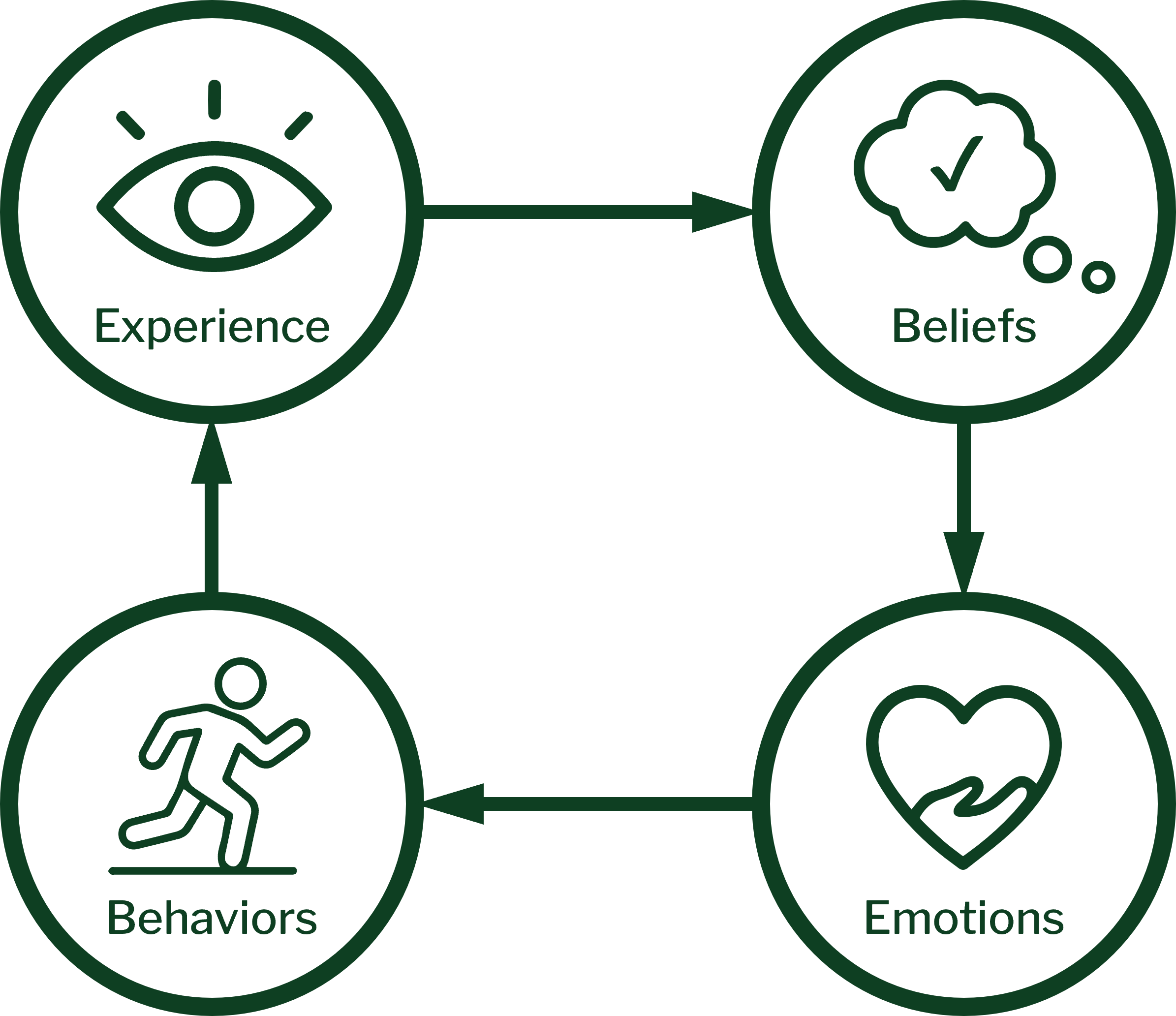
Some reactions feel so immediate that they seem to happen before we realize what is going on. Someone says something and we snap back. Someone cuts us off in traffic and our hands tighten on the wheel before we have made any conscious decision to be angry. These reactions are not random, and they are not a sign that something is wrong. They are the brain doing exactly what it was built to do, which is respond fast, based on everything it has learned.
Unlike other animals, we can add a further layer. We can recognize what we are recognizing. We can step back and observe the emotion, the belief, and the behavior as they unfold. That ability to think about our own thinking is what lets us pause instead of simply react.
How Experiences Become Beliefs
So how does the brain get so fast at recognizing things? It learns by building connections.
As we go through life, our brain collects experiences and groups the related ones together. A concept is simply a cluster of linked information. Your concept of “dog” holds what dogs look like, how they sound, how they move, and every experience you have ever had with one. Concepts link to other concepts, so “dog” connects to “animal,” “pet,” “loyalty,” and onward. Psychologists call these structures frames, because each concept acts as a mental frame that gives an experience its meaning.
A concept becomes a belief when our certainty about it gets high enough. We become confident that future experiences will match what we have already lived through.
Imagine a child looking at a picture of a dog when a balloon bursts nearby. The child has no experience of dogs being dangerous, but the brain links the two events. From that point on, dogs feel threatening. The child did not decide this. The brain made the connection on its own, and the certainty attached to it makes it feel like a fact.
Emotionally intense experiences can create that certainty instantly. We do not need to burn ourselves on a hot stove twice to be sure that a stove top means heat, pain, and danger. This is why difficult events can lodge so deeply, and why the intensity of what we feel sometimes seems out of proportion to what just happened.
This also means we may never know the root cause of a particular belief, and there is rarely just one. That is worth sitting with, because not knowing the root cause does not limit our ability to shift a belief toward something more reasonable.
Why Some Responses Are Faster Than Others
Not everything we do runs at the same level. Human functions group into three, and each produces a different kind of behavior.
- Inherent functions produce reflexes. These are the involuntary responses we are born with. Heart rate, digestion, blinking when something comes at your eyes. We have no conscious control over them.
- Learned functions produce reactions. These are the automatic responses we acquired along the way. Walking, driving, saying “fine, thanks” without checking whether it is true.
- Executive functions produce actions. These are deliberate and thought out. Planning a trip, learning something new, imagining a future we want.
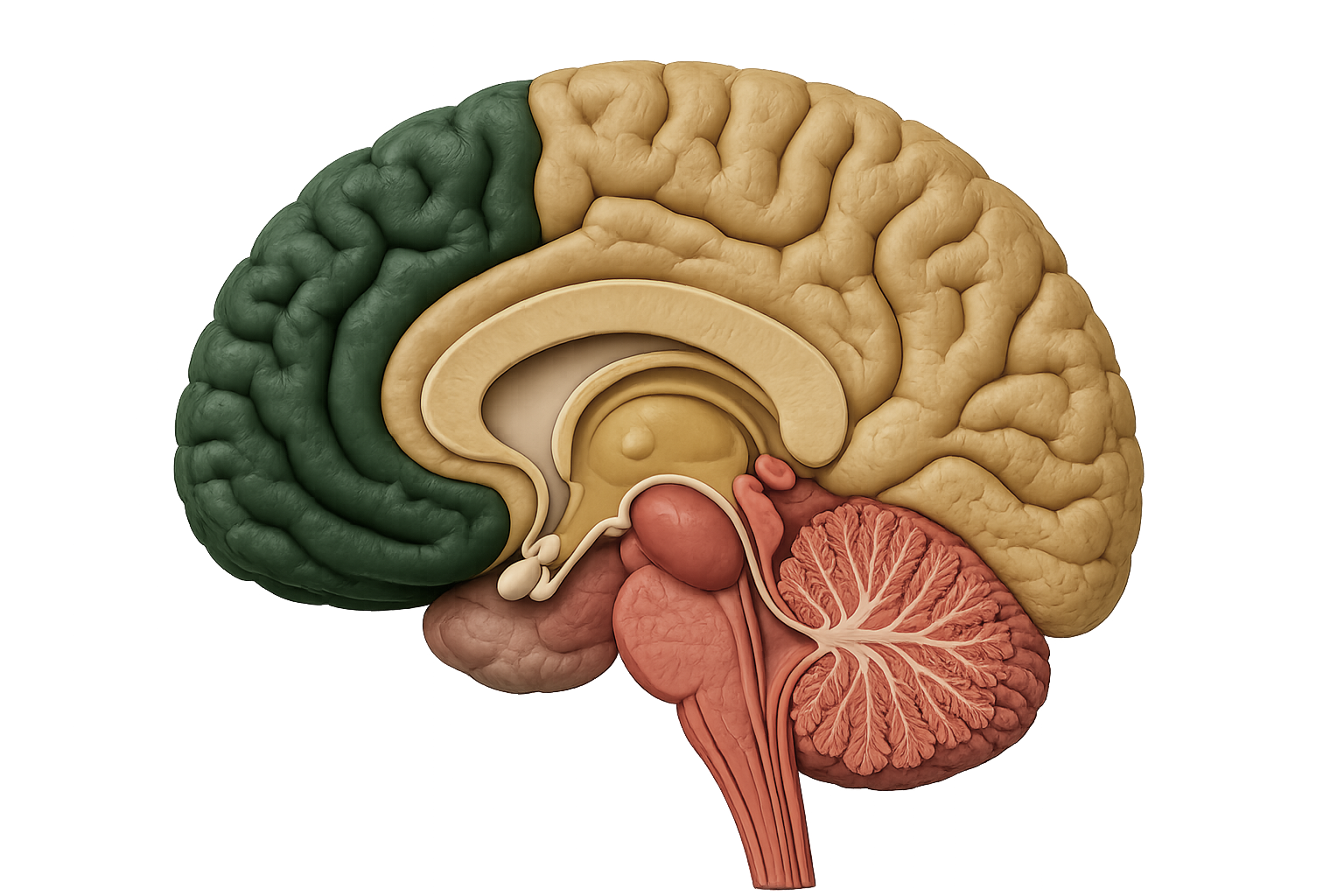
Pre-Frontal
Cortex
Neocortex
Amygdala Region
This is what explains why some responses feel instant and unstoppable while others feel like choices. Reflexes come from the oldest parts of the brain and deal with immediate survival. Reactions support learned skills that run without constant attention. Actions let us think things through and choose how we want to respond.
Most of our day happens at the middle level, on autopilot. That is efficient, and it is also where patterns can trap us. Because learned functions run without conscious oversight, we may not realize that the way we respond to certain people or situations was shaped by experiences we have long since forgotten. They feel like who we are. They are not. They were learned.
Your Brain Can Rewire Itself
Anything learned can be updated. Our beliefs do not just sit in our thoughts, they change the brain’s physical structure. When patterns repeat, new neural pathways form. This is neuroplasticity, and it is how riding a bike goes from demanding full attention to something you simply do.
Neuroplasticity is both a blessing and a problem. It speeds up processing, and it can lock us into repeating the same patterns. Here is the useful part. The same mechanism that set those patterns can also change them. When we bring consciousness to a moment, we can pause and choose a different response. Practiced often enough, the new response becomes the automatic one.
If you feel stuck, the patterns in your life do not have to be permanent.
What Emotions Are Actually Telling Us
Two people sit with the same racing heartbeat. One is about to ride a roller coaster. The other is about to walk into a job interview. Same body sensation, completely different experience. The difference is meaning.
A feeling is a body sensation. An emotion is what happens when we place that sensation into context by assigning it meaning. A churning stomach is a feeling. Recognizing it as hunger is one emotion. Recognizing it as nervousness is another. The same signal, interpreted through different beliefs, produces a different experience.
This is why emotions are not obstacles or inconveniences. They are data. They are our system reporting where we stand, and their intensity tells us how far from balance we are.
Language matters here too. When we say “I am angry,” we speak from inside the emotion, as though it defines us. When we say “I am experiencing anger,” we take an observational stance and recognize the emotion without being consumed by it. That is not a trivial difference. It is a skill, and it can be built.
Micro Practice: Noticing Your Mind
- Notice what your mind is doing right now. Quiet? Busy? Planning the rest of the day? Replaying yesterday? Whatever it is doing is fine.
- Just sit and notice it.
- Now notice that there is a part of you that can watch what your mind does.
That small gap, between whatever your mind was doing and the awareness that it was doing it, is more important than it may seem right now. It is where the work happens.
Where This Leads
Once you can see the process, you can start to work with it. That is what the 4-Steps™ approach is for, and the order matters.
Awareness comes first, which is Mindfulness. Kindness has to come next, which is Compassion, because without it awareness just gives the inner critic better material. Then comes Insight, understanding the stories underneath the emotion. And then Reframing, shifting those beliefs toward something more balanced and better supported by evidence. When beliefs shift, emotions shift with them.
Each step builds on the one before it. Skip one and the process stalls.