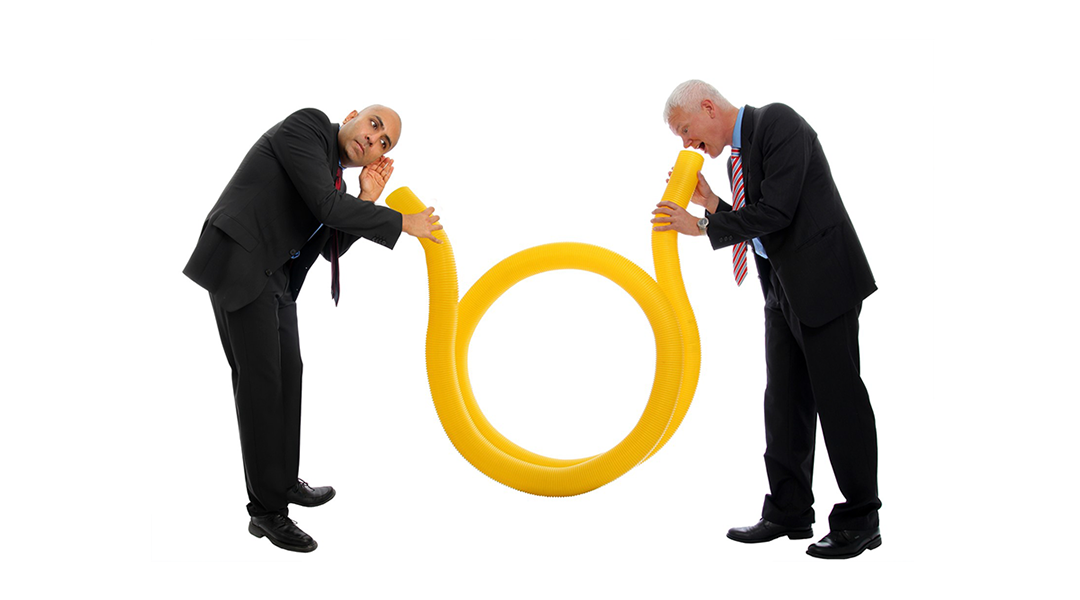
We are more connected than we have ever been and not obviously communicating any better. Attention is the scarce resource, and most of what goes wrong in a conversation goes wrong before anyone has said anything difficult.
The Attention Problem
A 2010 Harvard study found that people’s minds are not on what they are doing roughly 47% of the time. Nearly half our waking hours, our attention is somewhere other than where we are. The same study found that a wandering mind was often an unhappy one.
Apply that to a conversation and the implication is uncomfortable. Much of the time someone is talking to us, we are not fully there.
Some of that is devices. Much of it is older than devices. We are formulating a reply while the other person is still making their point, which means we stop listening somewhere in the middle in order to start preparing.
Generous Listening
Generous listening means giving someone the full gift of your attention. Not partial attention while you assemble a response. Actual attention, until they have finished.
It sounds simple and it is genuinely difficult, because it requires tolerating a gap. If you are not preparing your answer, there will be a moment after they stop where you do not yet have one. Most of us find that uncomfortable enough to avoid it.
The discomfort is worth sitting with, because what you say after actually listening is almost always better than what you had prepared halfway through.
Howard Beckman, Melissa Mooney, and colleagues studied communication among primary care physicians. After mindful communication skills were taught and practised, physicians’ ability to stay focused and listen improved, and so did the resulting diagnoses. The listening was not a courtesy. It was clinically useful information they had previously been missing.
Micro Practice: Three Breaths Before You Answer
- In your next conversation, notice the moment you start composing a reply.
- Set it aside and return your attention to the person speaking.
- When they finish, take one breath before responding.
- Notice whether what you say is different from what you had been preparing.
Why Conversations Escalate
Here is the thing that changes how difficult conversations go.
When someone says something and we react sharply, it is tempting to conclude their words caused the reaction. They did not. External events and other people’s words are the context, not the cause. They activate a response that was already loaded.
Two people can hear identical criticism and respond completely differently, not because the words differed but because their beliefs did.
Which means an intense reaction is telling us as much about our own beliefs as about what was said. A useful question in the moment: what is it in what they said that I believe might be true about me or about the situation?
This works in both directions. When someone reacts disproportionately to something you said, the same thing is happening on their side. Their beliefs generated the response. Understanding that makes it far easier not to escalate.
The Pause
The practical tool here is a technique called STOP: Stop, Take a breath, Observe, Proceed.
It creates a gap between what activates you and how you respond. In that gap you can notice what is happening, meet it without turning it into an attack on yourself or the other person, notice which of the three themes is being touched, and choose a response rather than produce one.
STOP works three ways. Afterward, revisiting a conversation that went badly to understand what happened. In the moment, catching yourself mid-activation. And beforehand, rehearsing a conversation you know is coming, the way an athlete visualizes before competing.
The Conversations We Avoid
Worth naming directly, because it removes communication entirely rather than degrading it.
When a conversation feels uncomfortable, we often just do not have it. That is averting, the automatic move away from discomfort, and in reasonable doses it is fine. As a default it becomes expensive.
A difficult conversation usually means sitting with some distress beforehand in order to improve something that matters. The discomfort is not a signal that something is wrong. It is the price of the thing being built.
The question worth asking is not how do I make this uneasy feeling go away. It is whether avoiding this actually serves what I care about here.
Empathy Is Trainable
Being aware of our own emotions is what makes us able to read others. If you cannot tell what you are feeling, you have little chance of accurately reading someone else.
And empathy increases when we perceive someone as similar to us. Research has found empathic responses rise significantly when people see someone from their own group in distress, with the effect driven by recognition of shared identity rather than by any particular group.
So we can deliberately look for common ground, especially where the differences are more visible. It is not a trick. It is how the mechanism works, used on purpose.
Related Reading
Mindfulness and Teamwork, Mindful and Compassionate Leadership, and Relationship and Social Management.